Monday, 14 March 2011

Making Money With Options

Now that silver continues hitting nominal high after high (except of course for the record price hit during the Hunt Bros period), and there is a very distinct possibility we may see an unprecedented melt up in the price of silver to over triple digits for a variety of previously discussed factors, here is a post we produced a year earlier, courtesy of a "deep insider" which dissects with exquisite detail the nuances of silver market manipulation, which in retrospect may have been just a little early. Considering that every single trope mentioned is now in play (even the unmasking of Buffett's unbelievable PM bashing hypocrisy when he himself was one of the people who utilized blatant silver market manipulation for his own purposes when it suited him back in 1997 to send silver soaring), we believe readers should re-read this post in its entirety as it presents a walk-thru for the mechanics, and strategy, of the ongoing unprecedented move higher in the shiny metal.

From A Deep Insider's Walkthru To Silver Market Manipulation, posted originally in April 2010, when silver was lower.... way lower.

As the topic of physical delivery has gained prominent attention
recently, it is crucial to complete  the circle and show how this
weakest link in the PM market is (ab)used by the big boys: Phibro and
Warren Buffet. Pay particular attention to the analogues between the
methods employed in the 90's commodity market and how the PM (and
equity) market is being gamed currently. And to think that each new
generation of traders believes it has discovered something new... (All emphasis below is ours)


Background


  • As
    a market maker in silver options from 1989 to 2000 I was present during
    both the 1994 and 1997 silver events. They were seminal in my education
    of gamesmanship in trading and how probabilities can come up short.
  • Prior
    to going out on my own, I traded at a small market making firm. When a
    trader finished training there, he had top-tier options knowledge but
    was not educated in whom the players were, the fundamentals of the
    markets, and how probabilities were useless when information was
    asymmetric. That wasn’t their business, they taught option’s theory.
    Since I had drunk the kool-aid, I thought fundamentals and gamesmanship
    were useless in the face of the almighty Standard Deviation model. That
    was a mistake. 

Phibro Early Exercise

  • In
    April 1994, the Thursday before Easter, the trading day ended with a
    rather unusual run up of 15 cents near the close to finish at 435ish
    around noon. Options expired that day at 4pm but we weren’t anywhere
    near the closest strikes (425 and 450) so most of us left. It was a 4
    day weekend in the U.S. but silver traded globally, albeit il-liquidly
    in Asia. Comex wouldn’t open until next Tuesday. My education in
    gamesmanship started that afternoon at JFK airport as I was waiting for a
    flight, my first vacation in 5 years.
  • My backer paged me at the
    airport to inform me that someone was exercising the K 450 calls. I
    scoffed thinking it was a retail sap that was talked into exercising
    some 5 lot piece by an overzealous broker. “Great I said, let them, the
    options are out of the money.”  And I hung up
  • 10 minutes later
    he had me paged again. “You don’t understand, it’s Phibro exercising.”
    Again I naively said, “So what, they are energy guys.” But I was
    curious, “How many? “ I asked. “All of them, five thousand, he replied.
    Now I was really curious, but still woefully ignorant that it was I who
    was the sap at the table. “Why would they do that?” and he explained it
    to me. I nearly shit myself and bent over in the cab vomiting on the
    ride back.
  • Cancelling my trip, I headed back to the office to
    assess the reality of what would happen, probabilities were no longer
    important.  Survival was important.  I had no money and was trading on a
    $25k note lent to me by my backer.
  • We covered by buying futures
    on my entire short open Interest equivalent of EXPIRED OUT OF THE MONEY
    OPTIONS in Singapore with a dealing firm.  We did this prior to even
    actually knowing if I was exercised, probabilities be damned. How did I
    know they exercised? The price covered at was $462; that is how. The
    450s were already in the money by 12 cents.
  • Phibro exercised all
    5k lots. I had a fraction of that but big enough to be carried out on a
    stretcher had the rest of my position not bailed me out/ performed on
    Tuesday next week.
  • The weird part was, the market stabilized
    that Tuesday and did not run to “infinity” as it could easily have. We
    found out later it was because Phibro’s exercise was a no-no and Warren
    Buffet ordered them to shut the trade down as it was too big of a
    potential scandal. Especially in light of his coming to Solly’s rescue
    and lending his good name to fix their most recent Treasury scandal. A
    couple head’s rolled there if I remember correctly.
  • My guess was
    that the client was a Buffet or Soros type. Someone that would only go
    to Phibro, as these guys were the best at preventing information
    leakage, and always aligned themselves with client interests, where as
    if IB had an order  and acted in dual capacity as a dealer, he would
    potentially front-run the order or stop it out poorly on an exit. Phibro
    didn’t take other side of their client’s orders. They ran with them,
    and took care of the clients first.
  • Phibro got a big order for a
    client to buy silver, one that had to be handled expertly, and filled
    over time, no information leakage would be tolerated.  These guys were a
    prop desk that took orders as brokers once in a while.
  • They accumulated options for their own account (K 450C) to piggyback but not front-run the client.
  • They must have bought futures for themselves as well as the client with his permission.
  • They beat the VWAP by gunning the market on light volumes 1 hour before a 4 day US holiday. [TD: compare and contrast with the daily patterns seen every single day in the endless move up in the S&P]
  • They
    exercised the 450 Calls that day and then lifted the offers of the 1 or
    2 OTC metals dealers left open during Singapore hours, running them
    over during illiquid markets.

Never Again!

  • I became infatuated with Phibro gamesmanship and made it a point to understand that particular type of player.
  • Libertarian
    Darwinist that I was I did not blame them. At the time It was a
    buyer-beware market for big businesses and they did nothing wrong. They
    took risk and they aren’t bigger than the market. I wanted to play with
    the big boys, and that was the price.
  • For me it was about
    learning how to read the signs and not be on the wrong side of one of
    those events again, even if I was not privy to their meetings.

Here is some of what I learned:

  • In
    metals (and energy and anything else with an OTC market) the IB firms
    have dealing desks along GS, MS, Republic, JPMorgan, Scotia Mocatta, all
    were essentially broker dealers in precious metals. All had clients:
    miners who hedged production and hedge funds who speculated OTC. They
    provided liquidity by taking the other side of their client’s trade and
    “back-to-backing” them in the futures markets or held onto them in their
    prop books as counterparty because of something else they saw.
  • Their
    client left resting orders with them in the IB’s Central Limit Order
    Book (CLOB) which served as good information to trade around for the IB.
    Sometimes they front-ran the client, other times they go for stops to force the client to puke. Sometimes they’d just make markets, depending on many things. It was poker to them.
  • Phibro
    was different. These were smart guys but they weren’t a dealing bank.
    They exploited imbalances in markets and took positions.  They had
    ideas. They also took orders for heavyweights who needed absolute
    discretion. They did not make it their business to fleece their own
    clients and instead aligned their interests. And they made the banks
    look like pikers when a client came to them with an order.
  • For
    the next 4 Years I paid attention to how those dealing banks and phibro
    played the markets. It was all about gamesmanship, Bayesian probability,
    and knowing your counterparty’s motivation with these guys. Information
    and misinformation.

Some methods:

  • How
    I.B firms would use a thinly traded floor to print the price that would
    trigger a massive stop loss in the OTC markets and bury their own
    clients.  Or how they would buy for their own accounts in front of
    resting limit orders for clients and simply use their clients to stop
    themselves out if the market printed thru their buy levels.  Or how they
    would use dual representation to show loudly they were buyers on one
    side of the ring, while they were selling quietly upstairs to other OTC
    dealers.  Trading with themselves in multiple entities, etc.
  • An
    IB with a Commodity Index was in heaven. Prop trading, captive client
    flow from IB deals and OTC dealing and Brokerage. The good ones knew how
    to integrate and hedge macro risks, whether to front run their own
    index clients or get out off their way.  “Chinese walls” did not exist
    in Commods.
  • Commods were mostly self regulated and that lead to predatory yet mostly legal behaviour. 
  • Some
    of these were necessary to protect their interests with such a small
    number of players. Some were possibly unethical, but most were legal.
    Their clients were all big boys who left resting orders with the IBs at
    their own risk. Clients themselves had to resort to some of the same
    tricks to keep the IB desks honest, like Coming in backwards,
    “spoofing”, leaving buy stops to get sell orders filled. The alternative
    for these clients was to put massive orders in the floor where
    liquidity was subjective, non continuous and information leakage was
    massive.

1997- Warren Buffet.

  • I got my chance to not get run over in 1997, when Warren Buffet gave an order to Phibro to buy silver.
  • Short version. Here is what went down.
  • Buffet gives Phibro the order- fact
  • Phibro
    begins filling it as a broker using various OTC dealers as
    counterparties, and letting the I.B dealers sweat getting out of the
    risk. - fact
  • Phibro buys options for their own account (no exercise game this time tho)- fact
  • Phibro buys futures for their own account. – not confirmed.
  • One
    by one the IB dealers start to catch on that this is no ordinary order
    Phibro is handling. They back away and liquidity gets harder to find.-
    fact
  • Other bigger hedge funds in the small circle of professionals, and other smart firms start getting long.- fact
  • Silver
    starts getting delivered from the Comex vaults. Some of it actually
    removed. Some of it just “covered with a sheet” for removal. But ounces
    begin to be removed from the warehouse. Phibro was rumored to be taking
    delivery and beginning to telegraph fear in the markets to start
    spoofing the VWAP. Rumor was they had a warehouse in Red Hook where they
    stored it.  Never confirmed.
  • Point here is, the saps for the
    last part of this play were the producers and refiners who were
    complacently net short and dependent on above ground silver to satisfy
    delivery requests.
  • Producers had been over-hedging for years in
    this market, as silver was cheap and they had business cash flow issues.
    It was their habit to sell forward production not yet available to
    them. And if forced to, they would lease already above ground silver and
    make delivery, collateralizing it with silver yet to be mined. Their
    positions were habitually synthetically long the contango as they rolled
    their deliverable production further and further out the curve in an
    attempt to squeeze much needed cash (cost of carry)for their businesses.
    The net effect was that sometimes they had to borrow silver for prompt
    delivery while they rolled their production hedge back further. – my
    interpretation of what I learned. May not be accurate to the “T”, am not
    a physical guy.
  • Example: in 1995 a miner has silver due above
    ground in 1997. He hedges it in Z-1997 contract.  Z 1997 comes and if he
    doesn’t have that silver available for some other reason; he covers the
    short and rolls it back. How much he needs to do this is a function of
    his obligations, cash flows, and his greed for carry. If leases are
    cheap, he will seek to capture all the contango and lease it until he
    gets the silver available.
  • If lease rates go up, it is not
    unlike a miner strike. Silver is needed for delivery now, and term risk
    becomes the issue. Contango collapses and market goes backwardated. He
    will be forced to sell the contango to get that prompt silver short back
    if he cannot make delivery. He has to defer delivery.
  • These guys were dependent on the specs NOT taking delivery for years. Specs didn’t have balance sheets to take and store physical metal. Specs usually were the weak hands at futures expiry.
  • But then…..Entities
    that stored silver in bank vaults (like the Republic vault) begin to
    remove silver from the available pool for leasing. This made the “easy
    money” portion of production financing no longer easy.  Think: smart
    money getting the word that a squeeze was on and playing along with it.
  • Phibro
    (and others) start selling the contango in the futures market to
    prepare to take delivery of even more contracts. Or at least put
    pressure on the producers who had front month shorts they would have to
    make a decision on delivering. Phibro KNEW that the producers had to
    sell the spreads to get their shorts back. But they couldn’t lift their
    shorts altogether as part of their financing deals with their bankers.
    Their own positions were now breaking down in every way except flat
    price. The market really didn’t move much. This let them stay in denial.
  • Buffet announces he is long and intends to take delivery of silver. Contango collapses. Market spikes to 7.40.
  • Rumor
    is gov’t intercedes and asks Buffet to not do this, it would break the
    industry. (Kind of like how the exchange begged the gov’t to help it
    shut down the Hunt Bros.)  He says ok, and agrees to lend then their
    silver back to them. Essentially charging them 40% interest to delay
    delivery for a year

What to look for:

  • Find the overleveraged/ extended party- and you will find the weak hand at the table. (Producers in 1997)
  • Tail
    wags dog: if the pricing venue trades smaller volume than the OTC, then
    manipulate price with small volumes to execute trades with big volumes
    favorably.  (OTC vs Comex floor)
  • Divide and conquer- if
    counterparties are undercapitalized and/ or fragmented, then it will be
    easier to get them to move like a herd.  (happens in options ALL THE
    TIME at expiration)
  • Manipulate data- take delivery of metal, take risk off books, manipulate MTM data.
  • Create
    an exit strategy- a good catalyst like Easter weekend, an announcement
    by an investor etc.  or develop a market and grow your own bigger fool.
    ie – retail.

Comments - So many points to make here:

  • How
    derivative markets can create a problem thru too much liquidity that
    cannot easily be reconciled by bringing physical production on line fast
    enough.
  • How this works both ways, and that dealing banks have
    been playing the gold/silver carry game for easy funding of other trades
    for years.
  • How, even though I personally think that what the
    OTC does is their own business, but the increasing securitization of
    commodities leaves regulatory arbitrage and OTC games to affect a new
    generation of ETF buyers, either thru incremental banking or thru
    contango cancer. That Wall Street salesmen and players with
    access to both markets retail and professional can exploit the captive
    audience created with ETFs and other fund type instruments to shear and
    in some cases skin the sheep.
  • That much of this happens
    because the gov’t is too stupid to see the inherent conflict of
    interest in what a broker-dealer does. Regulation will not stop gaming
    the law.  Ethics do, and not everybody has ethics. So best you
    can do is prevent situations of conflict of interest, like the existence
    of Broker-dealer type entities. Either you trade for yourself, or you
    trade for others. Period.
  • Fact is, if there were retail
    public in this game back then, the IB firms would have somehow sold
    them on the idea to BUY contango, or short silver. But the
    financialization of commodities wasn’t there yet. And the “bigger fool”
    game stopped at the producers. If it happened again, with ETFs, cross
    regulatory semi fungible products, asymmetric access to venues and other
    factors in a global market, the public would be killed, short squeeze
    or long puke (like in UNG now) take your pick.
  • You can never
    know intentions, and no one is bigger than the market, but the
    consequences of a lack of transparency and the free reign in which banks
    can tell half-truths to investors is a big factor in enabling strong
    hands to fleece weak hands with little market risk. It’s all a con game.
    And when the IBs figured out how to change the rules, then they
    were free to use their killer techniques to exploit a million little
    fish instead of the 10 big fish they usually competed with.
  • Phibro
    was a ballsy cowboy trading firm. The banks at the employee level are
    as well, but corporately, they first seek to make money and secondly
    provide a service. When they should be providing a service that makes
    money.
  • Everything that was done I’ve seen done the other
    way, keeping prices low, shaking out weaker players. Rarely does it
    happen in such a dramatic way. It is usually a series of “short cons” as
    opposed to Phibro’s home run. It’s all Darwinism. But when civilians
    are involved as they are now, then it is no longer caveat emptor
    .
  • Instead of taking a million dollars from a hedge fund, these guys take a dollar from a million people now.


Babies are big business. Nobody wants to be a bad parent, so there is great pressure to be sure you have not just the essentials, but the best essentials for your new baby. If you're a first-time parent, you have no experience to guide you. The helpful salesperson at the local Baby-Mega-Super-Store will be more than happy to provide you with a mile-long list of what, you're assured, are really and truly the essentials.


Well, I'm here to tell you different.


My fourth child is scheduled to make her appearance in just a couple of months. My oldest child is not yet five years old. For the last several years of my life, I've been a card-carrying, dues-paid, full-fledged member of the baby club. Many of those "essentials" you see for sale just turn into extraneous stuff that you have to keep cleaning, moving, and, at times, paying for. Save yourself some money and space, and stock up only on what you'll actually use. Here's my list of needs. (See also: Which Baby Products Are a Waste of Money?)


A Place to Sleep


A decent crib, a good mattress, and enough bedding to keep baby comfortable are essential. You don't, however, have to buy a crib new to get a good one. Search your local classifieds for a used crib; just make sure you get one that isn't more than five years old. It should be sturdy, with small spaces between the slats and all hardware intact. Most cribs that have been made within the last five years convert easily into toddler beds.


Salespeople at the Big Baby Box Store will scare you with talk of scoliosis and try to get you to buy the premium mattress for your crib. I bought the mid-grade; it's obviously firmer and nicer than the cheapest option, but it's also as firm and nice as I need it to be for peace of mind.


As far as what to put on the mattress, keep it simple. Bumper pads are not necessary and can even be a suffocation hazard. Same goes for big, fluffy comforters, pillows, stuffed animals, or piles of blankets. For the first six months or so, you'll want to have a mattress cover, five crib sheets (frequent spit-ups and diaper incidents make extras really nice to have around), and a couple of lightweight blankets. When the weather is cool, dress baby warmly so she won't get cold during nap time and night time.


A Place to Play


For the first several months of your baby's life, mobility won't be an option for him. This means, basically, that you can plop him down on a blanket, and he's not going anywhere. This also means that baby doesn't really need a swing, a bouncer, a play center, a play pen, a walker, a baby papasan, or any of the other play area options out there.


The caveat on this is when your baby does start to get mobile. Rolling, scooting, and then crawling will introduce a whole new world of possibilities. At that point, it's nice to have one or two confined play areas handy, so you can keep your baby entertained and safe while you need to do something else. But you don't need all the options.


Before you buy, test out what your friends have; go have a play date and put your baby in your friend's swing. If he's screaming in five minutes, don't spend $100 on a swing. If he's happy, it might be worth the investment. I've had the best response from my children with a very basic baby swing, a little reclined baby seat, and a Pack 'n Play that serves as a confined play area and can be moved to any room of the house, the yard, a friend's house, or Nana's house.


A Way to Travel


A safe car seat and a sturdy stroller are investments worth making for your new baby. You'll get the best deal on new items by purchasing a car seat/stroller combination; those will start at about $150 new and go up from there. The same advice applies to car seats and strollers as to cribs. If you're purchasing used, make sure the car seat/stroller isn't over five years old, and inspect it thoroughly to be sure it's in good condition.


The only other "travel" item I've used over the years is a front-pack baby carrier. I got a good brand, and it's lasted through heavy use with three babies. These seem to be mainly a matter of personal preference, however; if you can't picture yourself walking around with a baby strapped to your chest, don't buy one.


Clothes


Brand-new babies, prone to random bouts of spitting up and explosive diapers, can go through quite a few outfits in a day. Stock up on essentials that are comfortable for your baby and easy to get on and off: ruffles, ribbons, bows, zippers, buttons, and extra clothing "decor" tend to make the dressing process complicated and long (not fun when your baby is screaming), and, generally, the more "stuff" on an outfit, the less comfortable your baby will be in it.


Surface Encounters proudly ensures buyer satisfaction and total price setting up granite assurance. “I’m consistently skeptical heading with new vendors, but your employees has made me a believer!” - Steve, Indianapolis

Surface Encounters is often a fast-growing surface encounters corporation and, nonetheless they have stored tempo with every one of the modern consumer referrals. “This firm is one of the most inexpensive, reputable and pleasant organizations in the total state. I would encourage them to just about anyone.” - Mike R., South Bend

Many work goes into building spectacular countertops from nature. The method includes laser measurement artistic vein matching, precision diamond and water-jet cutting, edging and specialist installation. A single won't be able to only phone within their buy for a custom countertop and also have it in daily or two. High-quality normally requires time.

Surface Encounters encourages folks to go to a showroom to realize additional about natural stone countertops. Besides the assortment and fabrication plan, one more very important piece of purchaser care is making certain an individual understands the best way to care for his or her granite countertop to keep it hunting new for decades to come.

Granite can be a wonderful organic stone merchandise that is a well-known content used for countertops and floor tiles in kitchens and bathrooms. Granite has surpassed marble in attractiveness given that is it even more durable and less complicated to treatment for. Granite is unmatched by artificial goods for its strength and durability, tolerance to temperature modifications and resistance to stains and scratches.

Granite is definitely a effortlessly shaped stone that may be quarried from deep within the earth, harvested, lower, polished, sealed and installed in residences to add magnificence, elegance and model. Mainly because it is a purely natural product or service, no two slabs are specifically alike. Granite is accessible in a number of hues in the varied minerals which might be uncovered with the rock. Due to the fact it arrives from all over the entire world, numerous regions and environmental components allow it to be exceptional.

Granite is predominantly produced up of quartz crystal, nevertheless it also consists of a number of quantities of other metals together with feldspar, mica, copper and iron. Some granite may possibly incorporate bits of gold or silver. The amount of each metal is dependent about the region it comes from. All granite is formed right into a really hard stone by warmth and stress. Rain adds other minerals since it is forming. It can be on the market all over the entire world, in any country, and each region will create a surface encounters distinctive number of granite.

Surface Encounters state-of-the-art machinery guarantees the greatest high quality finished products because they style and develop some of the very best kitchens and bathrooms. Granite Countertops increase the warmth and magnificence of properties while raising their worth and strengthening lifestyles.

Surface Encounters can also be involved with worker morale; satisfied workers are further most likely to contribute to the good results of the enterprise. Additionally to becoming a prosperous service and a person that's great to operate for, Surface Encounters does their element to preserve our planet.

Surface Encounters does what is appropriate for his or her clientele, workers as well as the surroundings. Surface Encounters makes use of innovative drinking water recycling capabilities to recycle approximately 43,000 gallons of drinking water each day. Moreover, 100 percent from the scrap produced in creating beautiful kitchens and attractive baths is re-used as aggregate in street creating, surface preparations and concrete.

The Columbus, Ohio Grand Opening of Surface Encounters options an art gallery showroom of Granite, Marble, Quartz and Engineered Stone counter tops. Save Manager, Scott Donnelly unlocked the doorways of your showroom at 4717 Roberts Street, just west on the I-270 Beltway. The Surface Encounters manufacturing procedure makes use of precision, automated technologies throughout the fabrication for the customer's personalized counter high, this sort of as: a laser measuring alignment that packages the diamond-tipped sculpturing blades. Surface Encounters' technique comprises computer-driven application that perpetuates the stone's healthy veins. Any Surface Encounter keep has a minimum of a person registered, interior designer to assist you in constructing the finished challenge you are looking for. The craftsmanship continues with the

Homeowners are deciding to remodel rather than promote their properties in today’s marketplace
Granite countertops have grown to be a prime alternative amongst Wixom customers for kitchen remodeling projects. Kitchen remodeling is usually the very first venture tackled with households shelling out three,000 hours or more annually in their kitchen. Granite countertops offer an atmosphere that enhances the top notch time put in with relatives and pals. Granite countertops previous a lifetime and enhance the high quality of houses.

Surface Encounters Wixom store manager, Sal Dellacasa, says there are several explanations customers are picking granite for his or her countertop must have. “Granite countertops add attractiveness and elegance to a kitchen. Granite is offered inside of a variety of vibrant shades and rich textures and its strength and durability is unmatched by any other healthy stone or synthetic countertop content.”

Surface Encounters’ shoppers enjoy certified service along with a pleasant, very helpful employees to manual them with the kitchen remodeling technique. A large number of of Surface Encounters new customers are referred to them by prior consumers.
"This organization is just about the most inexpensive, trusted, and pleasant organisations within the whole state. I'd suggest them to any individual." Mike R. Clinton Twp., MI

"The provider has always been there to help me in no matter what way conceivable. Thank you a lot!" David V. Lapeer, MI


Surface Encounters Macomb will be the house of half-off granite for kitchen and bathroom countertops. Granite countertops by Surface Encounters have speedily grow to be the prime choice for Macomb residents who're remodeling their kitchens. Kitchen remodeling normally takes priority with households investing three,000 hours or more each year in their kitchen. Granite countertops provide an setting that enhances the top notch time spent with relatives and pals and increase the good quality of real estate.

Surface Encounters Macomb retailer manager, Sal Dellacasa, says there are various causes people are deciding upon granite for their countertop needs. “Granite countertops add beauty and elegance to a kitchen. Granite is obtainable inside of a variety of vibrant colors and prosperous textures and its strength and sturdiness is unmatched by any other surface encounters all natural stone or artificial countertop content.”

Surface Encounters’ buyers savor certified services and also a pleasant, valuable employees to guideline them through the kitchen remodeling system. Many of Surface Encounters new people are referred to them by preceding consumers.

Friday, 11 March 2011

Making Money With a Website

Founded in 2009 by Amanda Steinberg, DailyWorth is a regular email newsletter that features details on financial literacy and income management skewed in the direction of a female audience. DailyWorth’s subjects selection from tips on how to organize your finances to tax tricks to conserving information. And DailyWorth has an extraordinary editorial staff to produce content. MP Dunleavey, previously a particular finance columnist with the New york Instances and at the moment a contributor with Cash magazine, is leading DailyWorth’s editorial group.

Irrespective of unions’ prolonged hatred of Scott Walker, the new governor is moving to handle both the signs and symptoms of your disease and also the disease itself-the public-sector union scheme which has molested Wisconsin’s taxpayers and their children by gaming the process. Unions like Wisconsin’s teachers’ union [WEAC] (which was Wisconsin’s biggest-spending lobby in 2009) are already extraordinarily adept at fixing the product as a result of spending millions to elect politicians who, in turn, reward the unions at the expense of the taxpayers.

the Wisconsin battle, when when compared with private-sector negotiations is about: 1) the Scope of Bargaining, 2) Union “Income” Protection [Right-to-Work vs. Forced Dues], three) regardless of whether Wisconsin should be the unions’ dues assortment agency [payroll deduction of dues], and 4) whether or not public-sector unions have to be ‘recertified’ by keeping elections every single yr.

set the pics online to indicate our jobs staff at msnbc.com, and photographer Jim Seida reported, why don’t we just publish it as a slide present? I used to be skeptical initially - would that crimp the writing? - but during the conclude I used to be advocating carrying out it by doing this when the photo staff was skeptical. I considered far more consumers would go through due to it this way, and it might be value an experiment.”


industrial fishing boats based mostly in Crescent Metropolis place to sea very last night time once the tsunami alert was first broadcast. It truly is better to trip out tremendous waves at sea than at the dock. Now many of individuals boats are operating lower on fuel, but they are unable to return to port even while the surges keep on, reported Chris Renner, proprietor of C. Renner Petroleum Co. in Crescent City, which serves the fleet


bench craft company

bench craft company

bench craft company

bench craft company

bench craft company

bench craft company

bench craft company

bench craft company

bench craft company

bench craft company

bench craft company


foreclosure auctions

On Monday night time, I watched my primary, The Last Word host Lawrence O’Donnell.
Even when O’Donnell laudably tried to emphasis the audience’s focus onand hopefully very last, Charlie Sheen trainwreck interview, courtesy of the tragic undertow that threatens to pull Sheen beneath for fantastic, I used to be overtaken, not from the pulling around the thread, along with the voracious audience he serves. It didn’t make me sad, it crafted me angry.

Relating to celebrities, we are able to be a heartless nation, basking within their misfortunes like nude sunbathers at Schadenfreude Seashore. The impulse is understandable, to some degree. It can be grating to pay attention to complaints from individuals who benefit from privileges that most of us can’t even contemplate. If you cannot muster up some compassion for Charlie Sheen, who helps make a great deal more revenue to get a day’s effort than many of us will make inside of a decade’s time, I guess I cannot blame you.


Together with the speedy speed of events on the web along with the data revolution sparked through the World wide web, it’s especially straightforward for that engineering market to believe that it’s extraordinary: continuously breaking new ground and accomplishing items that no one has at any time achieved previous to.

But there are other sorts of small business which have currently undergone a number of the exact same radical shifts, and also have just as terrific a stake within the potential.

Get healthcare, as an example.

We sometimes believe of it being a substantial, lumbering beast, but in truth, medication has undergone a series of revolutions inside the previous 200 a long time which are not less than equal to people we see in technologies and specifics.

Much less understandable, but still inside of the norms of human nature, is the impulse to rubberneck, to slow down and check out the carnage of Charlie spectacle of Sheen’s unraveling, but from the blithe interviewer Sheen’s life as we pass it inside perfect lane of our everyday lives. To become sincere, it might be challenging for most people to discern the distinction in between a run-of-the-mill attention whore, and an honest-to-goodness, circling the drain tragedy-to-be. On its very own merits, a quote like “I Am On the Drug. It is Termed Charlie Sheen” is sheer genius, and we can’t all be anticipated to get the total measure of someone’s existence each and every time we listen to something funny.

Rapidly forward to 2011 and I'm trying to take a look at means of staying a bit more business-like about my hobbies (primarily new music). From the end of January I had manned up and started off to advertise my blogs. I had established various different weblogs, which had been contributed to by mates and colleagues. I promoted these routines through Facebook and Twitter.


2nd: the small abomination that the Gang of 5 about the Supream Court gave us a 12 months or so in the past (Citizens Inebriated) genuinely is made up of a bit bouncing betty of its individual that can very properly go off within the faces of Govs Wanker, Sacitch, Krysty, and J.O. Daniels. Since this ruling extended the principle of “personhood” to the two firms and unions, to experiment with to deny them any ideal to run within the legal framework that they were organized beneath deprives these “persons” with the freedoms of speech, association and movement. Which suggests (as soon as once again, quoting law college educated relatives) that either the courts really need to uphold these rights for that unions (as person “persons” as assured through the Federal (and most state) constitutions, or they have to declare that these attempts at stripping or limiting union rights really have to use to major corporations, also.


More than 8,300 homeowners in Illinois received notices from lenders that they’d defaulted on their mortgages and had foreclosures proceedings initiated against them last month, according to a monthly foreclosure report issued Thursday by Web site RealtyTrac.


In addition to the 8,345 homeowners receiving default notices, another 1,908 received notice that their homes were scheduled for court-ordered auction and 2,910 homes in the state were repossessed by lenders.


The numbers, as expected, are low because foreclosure activity stalled during the fourth quarter of 2010 while mortgage servicers investigated the internal procedures for processing foreclosures and repossessing homes.


Nationally, all types of foreclosure notices were reported on 261,333 residential properties, a 1 percent increase from December but down 17 percent from January 2010.


“We’ve now seen three straight months with fewer than 300,000 properties receiving foreclosure filings, following 20 straight months where the total exceeded 300,000,” said James Saccacio, RealtyTrac CEO, in a statement. “Unfortunately, this is less a sign of a robust housing recovery and more a sign that lenders have become bogged down in reviewing procedures, resubmitting paperwork and formulating legal arguments related to accusations of improper foreclosure processing.”


Separately, Woodstock Institute reported Thursday that despite a 55.2 percent dip in foreclosure auctions between the third and fourth quarter due to the ‘robo-signing’ scandal and resulting investigations, completed foreclosure auctions in the Chicago area rose by 25.2 percent in 2010, to 30,981 properties. In 95 percent of those auctions, after which a homeowner typically is evicted, the homes became lender-owned.


In the six-county Chicago area, almost 80,000 default notices were issued in 2010. Condominiums accounted for 42.5 percent of all foreclosure activity last year.


More than 8,300 homeowners in Illinois received notices from lenders that they’d defaulted on their mortgages and had foreclosures proceedings initiated against them last month, according to a monthly foreclosure report issued Thursday by Web site RealtyTrac.


In addition to the 8,345 homeowners receiving default notices, another 1,908 received notice that their homes were scheduled for court-ordered auction and 2,910 homes in the state were repossessed by lenders.


The numbers, as expected, are low because foreclosure activity stalled during the fourth quarter of 2010 while mortgage servicers investigated the internal procedures for processing foreclosures and repossessing homes.


Nationally, all types of foreclosure notices were reported on 261,333 residential properties, a 1 percent increase from December but down 17 percent from January 2010.


“We’ve now seen three straight months with fewer than 300,000 properties receiving foreclosure filings, following 20 straight months where the total exceeded 300,000,” said James Saccacio, RealtyTrac CEO, in a statement. “Unfortunately, this is less a sign of a robust housing recovery and more a sign that lenders have become bogged down in reviewing procedures, resubmitting paperwork and formulating legal arguments related to accusations of improper foreclosure processing.”


Separately, Woodstock Institute reported Thursday that despite a 55.2 percent dip in foreclosure auctions between the third and fourth quarter due to the ‘robo-signing’ scandal and resulting investigations, completed foreclosure auctions in the Chicago area rose by 25.2 percent in 2010, to 30,981 properties. In 95 percent of those auctions, after which a homeowner typically is evicted, the homes became lender-owned.


In the six-county Chicago area, almost 80,000 default notices were issued in 2010. Condominiums accounted for 42.5 percent of all foreclosure activity last year.


Source: http://removeripoffreports.net/ corporate Reputation Management

Fix your company's bad reputation today!

Saturday, 5 March 2011

personal finance budgeting

While it is important to have in writing all of your financial transactions, it is not really practical when the transaction is among friends or of a very small amount. However, you still would like some kind of casual record and YomTicket provides you with a way to do just that. YomTicket lets you create a quick YouOweMe ticket specifying who owes you what, your email as well as their email address.

Once you create the ticket an email is automatically sent to the recipient. You can also set reminders ranging from 2 times a day to once in 4 weeks. On the other hand, if you are the recipient and want to remember that you owe somebody, you can create an IOweYou ticket in a similar fashion.

Features:

  • Create YouOweMe and IOweYou tickets.
  • Specify who owes whom and exactly what.
  • Set automatic reminders.
  • Use via the iPhone app.
  • No registration required.
  • Similar tools: Billster, De-Bee, BillMonk, Scred and Billshare.

Visit YomTicket @ www.yomticket.com

While it is important to have in writing all of your financial transactions, it is not really practical when the transaction is among friends or of a very small amount. However, you still would like some kind of casual record and YomTicket provides you with a way to do just that. YomTicket lets you create a quick YouOweMe ticket specifying who owes you what, your email as well as their email address.

Once you create the ticket an email is automatically sent to the recipient. You can also set reminders ranging from 2 times a day to once in 4 weeks. On the other hand, if you are the recipient and want to remember that you owe somebody, you can create an IOweYou ticket in a similar fashion.

Features:

  • Create YouOweMe and IOweYou tickets.
  • Specify who owes whom and exactly what.
  • Set automatic reminders.
  • Use via the iPhone app.
  • No registration required.
  • Similar tools: Billster, De-Bee, BillMonk, Scred and Billshare.

Visit YomTicket @ www.yomticket.com


bench craft company

Newt Gingrich: Fox <b>News</b> Said &#39;You&#39;re Not Here Anymore&#39;

ATLANTA — Former House Speaker Newt Gingrich says he expects to be a candidate for the Republican presidential nomination in 2012. Gingrich announced Thursday that he's exploring a run for president, launching a website to collect ...

New York Times - Bill Keller - Fox <b>News</b> | Mediaite

The seemingly organic feud between the New York Times and Fox News took the forefront once more this week when the newspaper's Executive Editor Bill Keller called Fox viewers among the most cynical people on planet earth and blamed ...

Confirmed: AOL&#39;s Patch Buys Hyperlocal <b>News</b> Site Outside.In

AOL's Patch has acquired hyperlocal news aggregator Outside.In, we've confirmed with Patch's president Warren Webster. It's unclear what the terms of the deal are but Business Insider reported earlier that the acquisition is valued at ...


bench craft company

Newt Gingrich: Fox <b>News</b> Said &#39;You&#39;re Not Here Anymore&#39;

ATLANTA — Former House Speaker Newt Gingrich says he expects to be a candidate for the Republican presidential nomination in 2012. Gingrich announced Thursday that he's exploring a run for president, launching a website to collect ...

New York Times - Bill Keller - Fox <b>News</b> | Mediaite

The seemingly organic feud between the New York Times and Fox News took the forefront once more this week when the newspaper's Executive Editor Bill Keller called Fox viewers among the most cynical people on planet earth and blamed ...

Confirmed: AOL&#39;s Patch Buys Hyperlocal <b>News</b> Site Outside.In

AOL's Patch has acquired hyperlocal news aggregator Outside.In, we've confirmed with Patch's president Warren Webster. It's unclear what the terms of the deal are but Business Insider reported earlier that the acquisition is valued at ...


bench craft company

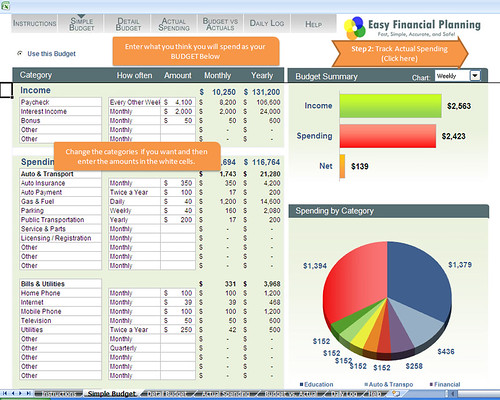
EasyFinancialPlanning.net Simple Budget by EasyFinancialPlanning.net


bench craft company

Newt Gingrich: Fox <b>News</b> Said &#39;You&#39;re Not Here Anymore&#39;

ATLANTA — Former House Speaker Newt Gingrich says he expects to be a candidate for the Republican presidential nomination in 2012. Gingrich announced Thursday that he's exploring a run for president, launching a website to collect ...

New York Times - Bill Keller - Fox <b>News</b> | Mediaite

The seemingly organic feud between the New York Times and Fox News took the forefront once more this week when the newspaper's Executive Editor Bill Keller called Fox viewers among the most cynical people on planet earth and blamed ...

Confirmed: AOL&#39;s Patch Buys Hyperlocal <b>News</b> Site Outside.In

AOL's Patch has acquired hyperlocal news aggregator Outside.In, we've confirmed with Patch's president Warren Webster. It's unclear what the terms of the deal are but Business Insider reported earlier that the acquisition is valued at ...


bench craft company

Newt Gingrich: Fox <b>News</b> Said &#39;You&#39;re Not Here Anymore&#39;

ATLANTA — Former House Speaker Newt Gingrich says he expects to be a candidate for the Republican presidential nomination in 2012. Gingrich announced Thursday that he's exploring a run for president, launching a website to collect ...

New York Times - Bill Keller - Fox <b>News</b> | Mediaite

The seemingly organic feud between the New York Times and Fox News took the forefront once more this week when the newspaper's Executive Editor Bill Keller called Fox viewers among the most cynical people on planet earth and blamed ...

Confirmed: AOL&#39;s Patch Buys Hyperlocal <b>News</b> Site Outside.In

AOL's Patch has acquired hyperlocal news aggregator Outside.In, we've confirmed with Patch's president Warren Webster. It's unclear what the terms of the deal are but Business Insider reported earlier that the acquisition is valued at ...


bench craft company

Newt Gingrich: Fox <b>News</b> Said &#39;You&#39;re Not Here Anymore&#39;

ATLANTA — Former House Speaker Newt Gingrich says he expects to be a candidate for the Republican presidential nomination in 2012. Gingrich announced Thursday that he's exploring a run for president, launching a website to collect ...

New York Times - Bill Keller - Fox <b>News</b> | Mediaite

The seemingly organic feud between the New York Times and Fox News took the forefront once more this week when the newspaper's Executive Editor Bill Keller called Fox viewers among the most cynical people on planet earth and blamed ...

Confirmed: AOL&#39;s Patch Buys Hyperlocal <b>News</b> Site Outside.In

AOL's Patch has acquired hyperlocal news aggregator Outside.In, we've confirmed with Patch's president Warren Webster. It's unclear what the terms of the deal are but Business Insider reported earlier that the acquisition is valued at ...


bench craft company

Newt Gingrich: Fox <b>News</b> Said &#39;You&#39;re Not Here Anymore&#39;

ATLANTA — Former House Speaker Newt Gingrich says he expects to be a candidate for the Republican presidential nomination in 2012. Gingrich announced Thursday that he's exploring a run for president, launching a website to collect ...

New York Times - Bill Keller - Fox <b>News</b> | Mediaite

The seemingly organic feud between the New York Times and Fox News took the forefront once more this week when the newspaper's Executive Editor Bill Keller called Fox viewers among the most cynical people on planet earth and blamed ...

Confirmed: AOL&#39;s Patch Buys Hyperlocal <b>News</b> Site Outside.In

AOL's Patch has acquired hyperlocal news aggregator Outside.In, we've confirmed with Patch's president Warren Webster. It's unclear what the terms of the deal are but Business Insider reported earlier that the acquisition is valued at ...


bench craft company

Newt Gingrich: Fox <b>News</b> Said &#39;You&#39;re Not Here Anymore&#39;

ATLANTA — Former House Speaker Newt Gingrich says he expects to be a candidate for the Republican presidential nomination in 2012. Gingrich announced Thursday that he's exploring a run for president, launching a website to collect ...

New York Times - Bill Keller - Fox <b>News</b> | Mediaite

The seemingly organic feud between the New York Times and Fox News took the forefront once more this week when the newspaper's Executive Editor Bill Keller called Fox viewers among the most cynical people on planet earth and blamed ...

Confirmed: AOL&#39;s Patch Buys Hyperlocal <b>News</b> Site Outside.In

AOL's Patch has acquired hyperlocal news aggregator Outside.In, we've confirmed with Patch's president Warren Webster. It's unclear what the terms of the deal are but Business Insider reported earlier that the acquisition is valued at ...


bench craft company

Newt Gingrich: Fox <b>News</b> Said &#39;You&#39;re Not Here Anymore&#39;

ATLANTA — Former House Speaker Newt Gingrich says he expects to be a candidate for the Republican presidential nomination in 2012. Gingrich announced Thursday that he's exploring a run for president, launching a website to collect ...

New York Times - Bill Keller - Fox <b>News</b> | Mediaite

The seemingly organic feud between the New York Times and Fox News took the forefront once more this week when the newspaper's Executive Editor Bill Keller called Fox viewers among the most cynical people on planet earth and blamed ...

Confirmed: AOL&#39;s Patch Buys Hyperlocal <b>News</b> Site Outside.In

AOL's Patch has acquired hyperlocal news aggregator Outside.In, we've confirmed with Patch's president Warren Webster. It's unclear what the terms of the deal are but Business Insider reported earlier that the acquisition is valued at ...


bench craft company

Newt Gingrich: Fox <b>News</b> Said &#39;You&#39;re Not Here Anymore&#39;

ATLANTA — Former House Speaker Newt Gingrich says he expects to be a candidate for the Republican presidential nomination in 2012. Gingrich announced Thursday that he's exploring a run for president, launching a website to collect ...

New York Times - Bill Keller - Fox <b>News</b> | Mediaite

The seemingly organic feud between the New York Times and Fox News took the forefront once more this week when the newspaper's Executive Editor Bill Keller called Fox viewers among the most cynical people on planet earth and blamed ...

Confirmed: AOL&#39;s Patch Buys Hyperlocal <b>News</b> Site Outside.In

AOL's Patch has acquired hyperlocal news aggregator Outside.In, we've confirmed with Patch's president Warren Webster. It's unclear what the terms of the deal are but Business Insider reported earlier that the acquisition is valued at ...


bench craft company

Newt Gingrich: Fox <b>News</b> Said &#39;You&#39;re Not Here Anymore&#39;

ATLANTA — Former House Speaker Newt Gingrich says he expects to be a candidate for the Republican presidential nomination in 2012. Gingrich announced Thursday that he's exploring a run for president, launching a website to collect ...

New York Times - Bill Keller - Fox <b>News</b> | Mediaite

The seemingly organic feud between the New York Times and Fox News took the forefront once more this week when the newspaper's Executive Editor Bill Keller called Fox viewers among the most cynical people on planet earth and blamed ...

Confirmed: AOL&#39;s Patch Buys Hyperlocal <b>News</b> Site Outside.In

AOL's Patch has acquired hyperlocal news aggregator Outside.In, we've confirmed with Patch's president Warren Webster. It's unclear what the terms of the deal are but Business Insider reported earlier that the acquisition is valued at ...


EasyFinancialPlanning.net Simple Budget by EasyFinancialPlanning.net


Monday, 21 February 2011

bank foreclosure


At the time of the now famous Ibanez decision, in which the Massachusetts Supreme Judicial Court dealt the securitization industry a not-all-that-surprinsing loss by saying that lenders and servicers had to be able to produce reasonable evidence that the mortgage had indeed been transferred to the party that was trying to seize the house. The court wrote:


When a plaintiff files a complaint asking for a declaration of clear title after a mortgage foreclosure, a judge is entitled to ask for proof that the foreclosing entity was the mortgage holder at the time of the notice of sale or foreclosure…. A plaintiff that cannot make this modest showing cannot make this modest showing cannot justly proclaim that it was unfairly denied a declaration of clear title.


Also note this section of the concurring opinion by Judge Cordy:


Foreclosure is a powerful act with significant consequences, and Massachusetts law has always required that it proceed strictly in accord with the statutes that govern it….The plaintiff banks, who brought these cases to clear the titles that they acquired at their own foreclosure sales, have simply failed to prove that the underlying assignments of the mortgages that they allege (and would have) entitled them to foreclose ever existed in any legally cognizable form before they exercised the power of sale that accompanies those assignments.


We were reminded of an outstanding mystery in the Ibanez case by a story tonight by Abigail Field on the role of carelessness by lawyers in the mortgage mess. She mentions a stunning aspect of the Ibanez case, one that quite a few observers, including yours truly, discussed privately at the time: that neither of the banks involved in the case produced a decent set of transaction documents (US Bank didn’t even provide a copy of the pooling and servicing agreement).


It is hard to convey how surprising this revelation is. If you have participated in any kind of corporate transaction, even at the small business level, your attorney as a matter of course will keep a signed copy of the agreement and any important related documents. The servicers and trustees would know that full well. So why did no one call issuer’s counsel and get the paperwork?


Field puzzles through this lapse and comes up with an incomplete list of possibilities:


So, the issue of partial deal documents that came to light in Ibanez and continues to crop up elsewhere means one of three things:


1. Securitization deals were so carelessly done that, despite all the proper documents being created, closing sets don’t exist.

2. Securitization deals were so carelessly done that not all the proper documents were created (such as lists of the mortgages involved) and so closing sets don’t exist.

3. All the documents and closing sets are fine, and the big banks have grown so incompetent they can’t give their foreclosure attorneys deal documents that they do have or could get from their securitization counsel.


I have trouble with her theories 1 and 2. The firms that did securitizations were white shoe firms, some of them of the cusp of top tier, the others just a wee notch below. And this was a bread and butter business. The donkey work of making sure all the documentation is in order is junior level time, which is marked up fully and thus nicely profitable. There would be no reason for the law firm to scrimp on it, and no reason for the client to want the law firm to cut corners.


MBS Guy has an opinion much more in keeping with mine:


I am even more convinced that the failure of the banks’ attorneys to track down the actual legal documents was not “carelessness”. I find it too hard to believe that the attorneys were this incompetent on an appeal of a major issue to the state’s supreme court. They had plenty of time (over a year).


Every deal I ever worked on had a full set of closing documents prepared in a binder. The issuer’s counsel law firm typically sent all of the documents to us via CD. We had stacks of them.


I suspect the foreclosing attorneys requested the documents and the requests were rejected by clever attorneys for the issuers who saw the potential liability and didn’t want to create a clear paper trail back to them.


If the low level foreclosing attorney looks incompetent in assembling his case, that’s one thing. If a big Wall Street law firm made a major mistake about the legal basis for selling loans without proper title in Massachusetts or any other state, well, that’s a whole different story.


Professor Adam Levitin has similarly pointed out that the major securitization law firms are in a sticky position, since they have legal liability on opinion letters.


But how would that operate? Those opinion letters were in an “if-then” form, “if you followed the steps you set forth, then you have a true sale.” But it now appears that much if not all of the securitzation industry opted, sometime after 2002, to change its procedures for how it handled promissory notes and liens without changing its contracts. That means, as we have pointed out repeatedly, that the parties in the origination process made very specific commitments to investors that they violated repeatedly, as a matter of business practice. Yet astonishingly they didn’t change the agreements to reflect what appears to have been a widespread adoption of new practices. Instead, they let the disparity, and the attendant liability, go unremedied.


It seems inconceivable that some of the players involved did not get counsel’s advice on this issue (I’d be stunned if Goldman didn’t; the firm is obsessed with having legal cover for its actions). But the breakdown was primarily in the custodial/trustee end of the process, which is a particularly low fee activity. So it is possible that the trustees or custodians conferred with their attorneys and did not formally bring issuer’s counsel into the loop. At the same time, these bad practices appear to have become so deeply embedded that I find it hard to believe that everyone on the sell side of these deals did not know what was happening as the new procedures became widespread.


As Field intimates, and I’ve said separately, until we see lawyers disbarred and facing charges, we can be pretty certain that we are only scratching the surface of mortgage abuses. But it is beginning to look like that day is not too far off.


A story at Huffington Post by Shahien Narisipour and Arthur Delaney, about how a couple lost their home as a result of the Administration’s HAMP program, actually serves to illustrate a broader issue, namely, how servicers’ dubious fees can put mortgage borrowers hopelessly under water.


It is critical to understand that it is not uncommon for borrowers to lose their homes thanks to servicer errors and abuses. And this bad practice has policy implications. Whenever we discuss “fix the housing mess” solutions that involve loss sharing, like giving viable borrowers a deep principal mod, some readers react that “deadbeat borrowers” are getting a free ride, and often will contend that they were irresponsible and need to take their medicine.


This black/white picture is simplistic and misleading. Yes, there were people who borrowed too much in the bubble. Guess what? Those people tended to have been subprime borrowers and the resets on teaser loans had pretty much concluded by the end of 2008. As a result, they would have been relatively early to hit the wall. Many have already lost their house.


Another cohort could have made the payments if they hadn’t lost their job or suffered a reduction in hours. And remember how soft this job market it is, so even people who had savings that would have been enough to carry themselves through a typical period of job search are coming up short. These individuals are collateral damage of the global financial crisis, but they too often are depicted as having been reckless rather than unlucky


But the third cohort is most often overlooked and most troubling, which is victims of servicer abuses. This problem is very much underdiagnosed because the servicer is judge, jury, and executioner as far as its charges are concerned. Borrowers find it a pitched battle to get the detailed payment records from servicers, even with a lawyer’s help. Even then, the statements are usually incomprehensible. Attorneys have told me they typically have to hire a forensic accountant both to get to the bottom of the mess and to serve as an expert witness.


Given how expensive it is to fight this sort of case on the real issue, the borrower’s belief that the servicer has overcharged him, many of these cases are instead fought on the simpler grounds of standing. That feeds the perception that borrowers are taking advantage of bank errors, rather than having legitimate grounds for opposing a foreclosure.


So the best we can go by is estimates by attorneys that actually handle these cases. Remember, most people who really cannot afford their house will not put up a fight. Nevertheless, Diane Thompson, Counsel for the National Consumer Law Center said in testimony before the Senate Banking Committee last November that in 50% of the cases she handled, the foreclosure was the result of a servicer driven default. I’ve had attorneys who’ve handled hundreds of cases put the percentage even higher.


Now some readers no doubt may be skeptical that servicer screw-ups or venality can have that sort of impact, so let’s look at the Michigan couple highlighted in Huffington Post as a case study.


The background is a bit ugly. The Garwoods had missed one payment, but this apparently was not unsalvageable; the husband’s roofing business was seasonal. Their servicer, JP Morgan Chase, contacted them and encouraged them to enroll in HAMP.


The HAMP trial mod, which was supposed to last three months, instead ran nine months and lowered their payments by about $500 a month. When they were ultimately refused a permanent mod (despite hearing encouraging noises from the servicer in the meantime), they were presented with a bill for the reversal of the reduction, plus fees, of $12,000.


Stop a second and do the math. Let’s be unduly uncharitable to JP Morgan and assume “about $500″ means $540. $540 x 9 is $4,860. That means the fees and charges were $7,140, or nearly $800 a month.


How can charges like that be legitimate? Answer: they almost assuredly aren’t. The payments were reduced as a result of a trial mod, so any late fees would be improper. Thus the only legitimate charges would be additional interest, perhaps at a penalty rate. So tell me how you have interest charges of nearly 400% on an annualized basis on the overdue amount and call them permissible? I guarantee there is not a shred of paperwork anywhere that can support this level of interest charge, either with the investor or with the borrower.


But as we indicated, it’s a hopelessly uphill battle to fight servicers on this issue. The Garwoods threw in the towel and stopped paying last spring. One can dispute whether that was the best move, but even if they have paid the normal mortgage amount due in full each month, it is almost a certainty that JP Morgan would have credited the payments, contrary to the pooling and servicing agreement, to fees first, assuring that the current amount due would be insufficient and thus not arresting the compounding charges. In other words, unless the Garwoods acceded to the bank’s bogus charges and paid the $12,000 in full, there was no way out of compounding fee hell.


We used to call that level of charges loan sharking and would send people to jail for it. It has now become standard operating procedure in banking and no one bats an eye.


<b>News</b> Corp. to Buy Shine Group for $663 Million - The Hollywood <b>...</b>

Rupert Murdoch's News Corp. is to acquire the entirety of Shine Group, owned by daughter Elisabeth Murdoch.

Soros: Fox <b>News</b> like Nazis in way it deceives people | The Daily <b>...</b>

“Well, look, Fox News makes a habit — it has imported the methods of George Orwell, you know, newspeak, where you can tell the people falsehoods and deceive them,” Soros said. “And you wouldn't believe that an open society and a ...

Northwest <b>News</b>: Amanda Knox movie airs today, to criticism <b>...</b>

Northwest news = a daily roundup of what's making headlines in the Pacific Northwest.


free rental agreement forms

Bank Foreclosures in Columbus, OH by bankforeclosuressale.com


Thursday, 17 February 2011

foreclosure sales

John Paulson, of the eponymous uber-hedge fund did an hour-long interview with the Financial Crisis Inquiry Commission.  I listened to it (thanks to NYT Dealbook, although not sure where they got it from), and really, I got a kick out of it even though I think my carpal-tunnel is really flaring up now.  Anyway, without further ado, here's what the man behind the Greatest Trade Ever has to say about the Financial Crisis…


When asked what he saw, when, and why he decided to get short, he said “First thing we noticed was that real estate market appeared very frothy, values rose very rapidly, which led me to believe real estate markets were over valued.”  That’s pretty simple/straightforward, no?  I think it’s pretty interesting that he said the 3 homes he’s bought were all out of foreclosure, and they’d increased in value 4-5x over a 2-3 year period through ~'2005.  Apparently the impetus for the research that led to The Trade was literally staring him in the face every time he got home from work!


He explained his approach, and the way he put it makes me really think the guys who didn’t leave their trading desks & “never saw the bubble/crash coming” really had their heads buried in the sand deeper than I previously thought.  As Paulson said, “Credit markets were very frothy, very little attention paid to risk, spreads were very low, we thought when those securities correct, it could present opportunities on short side.”


Their research approach was pretty straight-forward: Focus on subprime, where they were amazed at how low quality the underwriting was, and how low the credit characteristics were on the loans.  They found the average FICO  was around 630, and over half of the loans were for cash-out refi’s, which were based on appraised, not sales prices (so “value” could be manipulated).  For many of these loans, LTV was very, very high, 80, 90, 100% with many of them concentrated in California (no surprise there).  Close to have of the mortgages they looked at were of the stated-income, no-doc variety.


Those who did report incomes had D/I ratios of > 40% before taxes and insurance.  80% of them were ARMs, so-called 2/28’s with teaser rates around 6-7% for those first 2 years, but after they reset, the rates were L+ 600bps which at the point would have doubled the interest rate on these loans, and Paulson & Co thought there was very little - if any - chance borrowers would be able to afford the higher payments.


Once the rates reset, the only thing these borrowers could do would be to sell, refinance, or default.  These were people spending > 40% of their gross income on their mortgages already, once the rate jumped up after the teaser period, they expected that many borrowers would simply default, and the price of the RMBS into which these loans were securitized would fall drastically, while the price of the protection (CDS, etc) Paulson bought on them would skyrocket.


Paulson & co also went much further in their analysis, well-beyond what many of those on Wall Street were doing.  In May, 2006, they researched growth of 100 MSA’s and found that there was a correlation between growth and the performance of subprime loans originated within them.  As growth rates slowed, defaults rose.  From 2000-2005, they found that with 0% growth, there’d be losses of around 7% in the mortgage pools.


When they looked at the structure of the RMBS they found the average securitization had 18 separate tranches and that the BBB level only had 5.6% subordination, essentially, once losses surpassed that point, the tranches would become impaired, and if they reached 7% losses (what Paulson thought would happen once home price appreciation only slowed to 0%), the entire tranch would get wiped-out entirely.


By mid-2006, home prices not only had slowed to 0% but were actually decreasing, albeit slowly, only about 1%.  Even still, demand from institutional investors was so great, spreads tightened to 100bps. Why?  Because as Paulson went on to explain, institutional investors were buying up the BBB tranches (the lowest investment grade ones) in hoards.


While he didn’t say it, I will (for the umpteenth time!): This is what happens when institutions effectively outsource credit research to the Ratings Agencies, even though many had/have internal credit analysis groups (ahem IKB ahem).  They buy the highest-yielding security you can find that meets your investment guidelines, which meant that for many, they could only buy securities deemed by the brain trusts at the Ratings Agencies as “Investment Grade.”


Paulson started their credit fund in June, 2006, and as he explained, it wasn’t really as simple as it may seem. Historically - going back to about WWII - the average loss on subprime securities was 60bps, nowhere near what Paulson & Co expected was about to happen.  As he said “according to the mortgage people, there’d never been a default on an investment grade (IG) mortgage security.”  These same people were also of the mindset that they’ll NEVER get to the levels where the BBB tranches are impaired let alone wiped out completely.   These were also the same people who said that not since the Great Depression there hadn’t been a single period where home prices declined nation-wide.  These same people thought, worst case, home price growth would drop to 0% temporarily and then return to growth, just like before.


Why would “the mortgage people” expect anything else?  From their desks on the trading floors in Manhattan, Stamford, London, and everywhere else, things looked just peachy!  Spreads were tightening, demand for product was up, and more importantly, so were bonuses!  As far as they knew, the mammoth mortgage finance machine they’d created, based on their complex models and securities was working perfectly…


Paulson also made a distinction missed by many if not most: Everyone was looking at nominal home price appreciation, but real appreciation numbers were much different.  Going back 25+ years using real growth rates, they found that prices had never appreciated nearly as quickly as they had from 2000-2005, and that this trend was unlikely to continue for much longer, i.e. there would be a correction and then mean reversion.  Their thought was that once this correction came about, because of the poor mortgage quality and questionable assumptions/structures in mortgage securities, losses would be much worse than estimated.


Paulson was intent to make one distinction, one that must have been the cause of at least some frustration (followed by fantastic jubilation), that they did their own analysis, they weren’t really trying to attack “the mortgage people’s” views specifically.  Instead, they were trying to understand the conventional wisdom and understand why they had contrary viewpoints.  As myself and countless others have pointed out over the years since, the mortgage industry (I guess we’ll stick with calling them “the mortgage people?”) brushed Paulson off as “inexperienced, as novices in the mortgage market, they were very, very much in the minority...Even our friends thought we were so wrong they felt sorry for us…”


The mortgage people didn’t see any problems because there’d never been a default, except for one manufactured housing (mobile home) deal in the early 1990’s in California.


"The Ratings agencies - Moody's - wouldn’t let you buy protection on securities from a particular state, because they ensured that the pools were geographically diversified, so they were essentially national pools, although California loans had the highest concentrations therein the pools correspond to the level of home sales in each state."


What I found surprising from the interview is that Paulson actually praised the mortgage underwriting/originating practices of the big established banks like Wells Fargo and JP Morgan, which he said generally had the best underwriting standards and controls.  The worst were from the New Centuries and Ameriquests, eclipsed in their lax standards only by the mom & pop type shops who were really just sales businesses who made money on the volume of product they originated and sold to Investment Banks like Lehman and Morgan Stanley that didn’t have their own origination network.


These smaller “rogue” mortgage originators were mostly private entities who weren’t under the same scrutiny of their larger, publically-traded “competition.”  Their sales teams were compensated purely on quantity of loans originated with little-to-no care for quality.  These were the guys who routinely falsified documents, appraisals, incomes, assets and/or encouraged borrowers to do the same.  These were the kind of places that made Countrywide’s standards and controls look almost honorable by comparison.


The FCIC then asked Paulson about the infamous ABACUS debacle.  Paulson’s tone when responding to questions from the FCIC here was so, so, awesome; you could hear it in his voice, like he wanted to just say “are you guys freaking kidding me?  Seriously?!?!  REALLY?!??!” every time they asked him about how CDO’s got made.  He basically said (paraphrasing) “If ACA and IKB or Moody’s didn’t like the ~100 subprime reference securities we helped pick for the deal, they could have…not bought the deal or - get this - replaced them with ones they liked better…I couldn’t have gone short if they hadn’t gone long, they agreed on the reference portfolio, it got rated, boom, done”  It sounded like he just wanted to say something like “Hello morons?!  This is how Finance works, HELLOOO!!!”


The ABACUS conversation ended pretty awkwardly (as you might imagine), and then the FCIC moved onto asking Paulson about his Prime Brokerage relationships and what he thought about the Banks.  Interestingly (to me, at least), Paulson had much of it’s assets with Bear Stearn’s Prime Brokerage primarily because the way Bear was structured , the PB assets were ring-fenced from the rest of Bear’s assets in a separate subsidiary, so even if Bear went down, the PB assets would theoretically be safe.  The rest of Paulson’s assets were with Goldman’s PB.  When Bear’s Cioffi/Tanin-run internal hedge funds failed, Paulson saw that as the proverbial canary in a coal mine; they knew the crap that Bear, Lehman, and everyone else had on their books.  They didn’t pulled all of their cash balances from their prime brokers and set up a contra-account at Bank of New York, where, by the time Lehman went Bankrupt, they were holding most of their assets in Treasuries there.


Next, the FCIC asked him about regulators and banks and what people could (or, better, SHOULD) have done that might have prevented the crisis.  Paulson called out the Fed for not enforcing the mortgage standards that were already in effect.  He mentioned that pre-2000, no-doc loans were only given to people who could put 50% down and only represented about 1% of the mortgage market, but only a few years later, originators were “underwriting” NINJA loans with 100% LTV!


Paulson went on to explain how simple fixes, so-to-speak, just enforcing existing regulations like requiring income/asset verification, that homes were owner-occupied, and a downpayment, as low as 5% would have made a huge difference.  Most of the mortgages that failed didn’t have those characteristics.  Excessive leverage and poor understanding of the credit, problems Paulson also say brought down Bear and lehman.  They were leveraged (total assets: tangible common equity) on average, 35:1.  At that sort of massive leverage, a 3% drop in assets would wipe out every $ of equity!


Even if that ratio was brought down to 12:1 and you increase their capital ratio to 8%, the banks still couldn’t hold some of the riskier, more illiquid assets like Private Equity interests, equity tranches of CDO’s, lower-rated buyout debt from many real estate deals, and other assets that themselves were already highly-leveraged.  Adding further leverage to assets themselves already levered an additional 12:1 is just lunacy.  No financial firm should be able to do that, at max those assets should only be allowed to be levered 2:1 (similar to the max leverage for stocks due to Fed Regulation T).


He went on (this is pretty much verbatim, emphasis mine): “Under those scenarios, I don’t think either bank would default.  AIG FP was absurd and exemplified the derivative market where you can sell protection with zero collateral.  AIG FP Sold $500bn in protection with $5bn collateral, 100:1 collateral.  ACA was collateral agent, they were like 120:1 leveraged.  $50bn protection on $60mm collateral.  You have to hold collateral, we need margin requirements for both buying & selling protection.  It’s not the derivative itself that’s the problem, it was the margin requirements (or lack thereof).  We need something like Reg T (max 2:1 leverage at trade inception).  What these guys did would be like like buying $100 of stocks with $1 of equity, a tiny downward move is a huge loss of equity.  In all, these four things would have likely prevented the crisis:


  1. Mortgage underwriting standards, simple & logical

  2. Higher bank capital ratios

  3. Higher capital against risk assets

  4. Margin requirements against derivatives


Paulson was then asked about the Ratings Agencies and what role they played in the bubble/crisis.  Regular readers know where I stand on them & NRSRO regs, and no surprise, Paulson is similarly critical, particularly of the issuer-pays compensation structure, calling it the perverse incentive that it really is, despite whatever nonsense rhetoric RA executives say.


That, combined with being public (or part of public companies) and they were in this race to keep pace with their competitors, to keep up earnings growth with their derivatives business, which he called a “perverse economic incentive that may have led to their laxness in rating securities”


He went-on to explain this same - in the immortal words of Citi CEO Chuck Prince - “keep dancing while the music’s still playing” - incentive structure led the Banks to take similarly short-sighted actions as they struggled to keep up earnings, growth, and of course, bonuses.  At that point, the only way to do that was to grow their balance sheets, add more leverage to earn spread.  In Paulson’s words “Once things go up like that, you don’t see any downside, so at top of market they just weren’t looking at the downside, just upside, became more and more aggressive until they blew up.”


Paulson said the Fed certaintly could have cracked-down on lax-underwriting standards, eliminated negative-amortization loans, stated-income, 100% LTV, IO’s, etc where most of the problems developed.  On the banks and more broad financial services industry, he said “…people became delusional, ‘we can leverage AAA 100:1…’ if you had margin requirements against derivatives, AIG could have NEVER happenedIf they held higher equity against risky investments, they would have never defaulted. Constructively, that’s what Basel 3 says, 8% equity/capital and higher risk weightings for illiquid risky type assets.  I think adoption of those rules will lead to a safer financial system.”


When asked about the role of Fannie May & Freddie Mac, he pointed out the problem was largely similar to what brought down the banks and AIG: excessive leverage and poor oversight/underwriting. “They deviated from their underwriting standards as a way to gain share in alternate mortgage securities, of poor quality & higher losses.  Second, they were also massively leveraged 80-120:1 if you include on-balance sheet assets & guarantees which is way more than any financial institution should have.”


Yea, I think 120:1 leverage is just a wee bit more than prudent, just a bit though…


From this interview it seems painfully clear that those with whom the safety of the Financial System rested were in a deep coma at the helm, Bank executives, regulators, Congress, institutional money managers, all of them.   It’s clear that the nonsensical argument put-forward by Tom Arnold & Yves Smith that those who were shorting housing, subprime, etc were NOT IN ANY WAY, SHAPE, OR FORM remotely responsible for causing the crisis.  Institutional managers were not gobbling-up BBB-rated RMBS CDO tranches because shops like Paulson & Co were shorting them. Like I said before: they wanted the highest yield they could get away with holding!


As Paulson said, anyone who looked at the data he did should have noticed the impending doom, but apparently, either very, very few people did that type or analysis or they did and just, like Chuck Prince said, kept on dancing until the music stopped.


These traders thought tight spreads indicated safety, which is just wrong in so many ways.  These are the same morons who - thought they should know better - constantly confuse correlation with causation.  Low spreads may have been historically correlated with low default and loss rates, but low spreads do not cause low losses/defaults.  Spreads, like stocks, trade as a function of supply and demand, and all low spreads indicate(d) is that, as Paulson noted, institutional managers were swallowing up as much of these MBS and derivatives (for reasons I explained above), and, like a bunch of lemmings, all thought history would continue despite significant evidence suggesting this time, it was actually different.


One other thing that critics and the public at large probably doesn’t know is that Paulson & Co had a MASSIVE internal, independent research effort wherein they did crazy things like *gasp* look at loan-level data.  Imagine that!  This enabled them to hunt for CDO and other product that contained an inordinate amount of crap for them to short.  This same work also helped them to buy RMBS/CMBS etc when the market turned in 2008 and 2009. They had done the work, and knew what they were willing to pay once it was time to go long.


I’m not saying there’s anything necessarily wrong technical, momentum, and quantitative trading strategies.  There is, however, something very wrong, and very dangerous about relying on these strategies alone while ignoring fundamentals, as evidenced by the housing crisis.  Those who did the hard work like Paulson & Co. made the greatest trade ever, while those who ignored or were otherwise blind to the fundamentals got absolutely crushed.

John Paulson, of the eponymous uber-hedge fund did an hour-long
interview with the Financial Crisis Inquiry Commission.  I listened to
it (thanks to NYT Dealbook,
although not sure where they got it from), and really, I got a kick out
of it even though I think my carpal-tunnel is really flaring up now. 
Anyway, without further ado, here's what the man behind the Greatest Trade Ever has to say about the Financial Crisis…


When
asked what he saw, when, and why he decided to get short, he said
“First thing we noticed was that real estate market appeared very
frothy, values rose very rapidly, which led me to believe real estate
markets were over valued.”  That’s pretty simple/straightforward, no? 
I think it’s pretty interesting that he said the 3 homes he’s bought
were all out of foreclosure, and they’d increased in value 4-5x over a
2-3 year period through ~'2005.  Apparently the impetus for the
research that led to The Trade was literally staring him in the face
every time he got home from work!


He explained his approach, and the way he put it makes me really
think the guys who didn’t leave their trading desks & “never saw
the bubble/crash coming” really had their heads buried in the sand
deeper than I previously thought.  As Paulson said, “Credit markets
were very frothy, very little attention paid to risk, spreads were very
low, we thought when those securities correct, it could present
opportunities on short side.”


Their research approach was pretty straight-forward: Focus on
subprime, where they were amazed at how low quality the underwriting
was, and how low the credit characteristics were on the loans.  They
found the average FICO  was around 630, and over half of the loans were
for cash-out refi’s, which were based on appraised, not sales prices
(so “value” could be manipulated).  For many of these loans, LTV was
very, very high, 80, 90, 100% with many of them concentrated in
California (no surprise there).  Close to have of the mortgages they
looked at were of the stated-income, no-doc variety.


Those who did report incomes had D/I ratios of > 40% before taxes and insurance.  80% of them were ARMs, so-called 2/28’s
with teaser rates around 6-7% for those first 2 years, but after they
reset, the rates were L+ 600bps which at the point would have doubled
the interest rate on these loans, and Paulson & Co thought there
was very little - if any - chance borrowers would be able to afford the
higher payments.


Once the rates reset, the only thing these borrowers could do would
be to sell, refinance, or default.  These were people spending > 40%
of their gross income on their mortgages already, once the rate jumped
up after the teaser period, they expected that many borrowers would
simply default, and the price of the RMBS into which these loans were
securitized would fall drastically, while the price of the protection
(CDS, etc) Paulson bought on them would skyrocket.


Paulson & co also went much further in their analysis,
well-beyond what many of those on Wall Street were doing.  In May,
2006, they researched growth of 100 MSA’s
and found that there was a correlation between growth and the
performance of subprime loans originated within them.  As growth rates
slowed, defaults rose.  From 2000-2005, they found that with 0% growth,
there’d be losses of around 7% in the mortgage pools.


When they looked at the structure of the RMBS they found the average
securitization had 18 separate tranches and that the BBB level only had
5.6% subordination, essentially, once losses surpassed that point, the
tranches would become impaired, and if they reached 7% losses (what
Paulson thought would happen once home price appreciation only slowed
to 0%), the entire tranch would get wiped-out entirely.


By mid-2006, home prices not only had slowed to 0% but were actually
decreasing, albeit slowly, only about 1%.  Even still, demand from
institutional investors was so great, spreads tightened to 100bps.
Why?  Because as Paulson went on to explain, institutional investors
were buying up the BBB tranches (the lowest investment grade ones) in
hoards.


While he didn’t say it, I will (for the umpteenth time!): This
is what happens when institutions effectively outsource credit research
to the Ratings Agencies, even though many had/have internal credit
analysis groups (ahem IKB ahem).  They buy the highest-yielding
security you can find that meets your investment guidelines, which
meant that for many, they could only buy securities deemed by the brain
trusts at the Ratings Agencies as “Investment Grade.”


Paulson started their credit fund in June, 2006, and as he
explained, it wasn’t really as simple as it may seem. Historically -
going back to about WWII - the average loss on subprime securities was
60bps, nowhere near what Paulson & Co expected was about to
happen.  As he said “according to the mortgage people, there’d never
been a default on an investment grade (IG) mortgage security.”  These
same people were also of the mindset that they’ll NEVER get to the
levels where the BBB tranches are impaired let alone wiped out
completely.   These were also the same people who said that not since
the Great Depression there hadn’t been a single period where home
prices declined nation-wide.  These same people thought, worst case,
home price growth would drop to 0% temporarily and then return to
growth, just like before.


Why would “the mortgage people” expect anything else?  From their
desks on the trading floors in Manhattan, Stamford, London, and
everywhere else, things looked just peachy!  Spreads were tightening,
demand for product was up, and more importantly, so were bonuses!  As
far as they knew, the mammoth mortgage finance machine they’d created,
based on their complex models and securities was working perfectly…


Paulson also made a distinction missed by many if not most: Everyone
was looking at nominal home price appreciation, but real appreciation
numbers were much different.  Going back 25+ years using real growth
rates, they found that prices had never appreciated nearly as quickly
as they had from 2000-2005, and that this trend was unlikely to
continue for much longer, i.e. there would be a correction and then
mean reversion.  Their thought was that once this correction came
about, because of the poor mortgage quality and questionable
assumptions/structures in mortgage securities, losses would be much
worse than estimated.


Paulson was intent to make one distinction, one that must have been
the cause of at least some frustration (followed by fantastic
jubilation), that they did their own analysis, they weren’t really
trying to attack “the mortgage people’s” views specifically.  Instead,
they were trying to understand the conventional wisdom and understand
why they had contrary viewpoints.  As myself and countless others have
pointed out over the years since, the mortgage industry (I guess we’ll
stick with calling them “the mortgage people?”) brushed Paulson off as
“inexperienced, as novices in the mortgage market, they were very, very
much in the minority...Even our friends thought we were so wrong they
felt sorry for us…”


The mortgage people didn’t see any problems because there’d never
been a default, except for one manufactured housing (mobile home) deal
in the early 1990’s in California.


"The Ratings agencies - Moody's - wouldn’t let you buy protection on
securities from a particular state, because they ensured that the pools
were geographically diversified, so they were essentially national
pools, although California loans had the highest concentrations therein
the pools correspond to the level of home sales in each state."


What I found surprising from the interview is that Paulson actually
praised the mortgage underwriting/originating practices of the big
established banks like Wells Fargo and JP Morgan, which he said
generally had the best underwriting standards and controls.  The worst
were from the New Centuries and Ameriquests, eclipsed in their lax
standards only by the mom & pop type shops who were really just
sales businesses who made money on the volume of product they
originated and sold to Investment Banks like Lehman and Morgan Stanley
that didn’t have their own origination network.


These smaller “rogue” mortgage originators were mostly private
entities who weren’t under the same scrutiny of their larger,
publically-traded “competition.”  Their sales teams were compensated
purely on quantity of loans originated with little-to-no care for
quality.  These were the guys who routinely falsified documents,
appraisals, incomes, assets and/or encouraged borrowers to do the
same.  These were the kind of places that made Countrywide’s standards
and controls look almost honorable by comparison.


The FCIC then asked Paulson about the infamous ABACUS debacle. 
Paulson’s tone when responding to questions from the FCIC here was so,
so, awesome; you could hear it in his voice, like he wanted to just say
“are you guys freaking kidding me?  Seriously?!?!  REALLY?!??!” every
time they asked him about how CDO’s got made.  He basically said
(paraphrasing) “If ACA and IKB or Moody’s didn’t like the ~100 subprime
reference securities we helped pick for the deal, they could have…not
bought the deal or - get this - replaced them with ones they liked
better…I couldn’t have gone short if they hadn’t gone long, they agreed
on the reference portfolio, it got rated, boom, done”  It sounded like
he just wanted to say something like “Hello morons?!  This is how
Finance works, HELLOOO!!!”


The ABACUS conversation ended pretty awkwardly (as you might
imagine), and then the FCIC moved onto asking Paulson about his Prime
Brokerage relationships and what he thought about the Banks. 
Interestingly (to me, at least), Paulson had much of it’s assets with
Bear Stearn’s Prime Brokerage primarily because the way Bear was
structured , the PB assets were ring-fenced from the rest of Bear’s
assets in a separate subsidiary, so even if Bear went down, the PB
assets would theoretically be safe.  The rest of Paulson’s assets were
with Goldman’s PB.  When Bear’s Cioffi/Tanin-run internal hedge funds
failed, Paulson saw that as the proverbial canary in a coal mine; they
knew the crap that Bear, Lehman, and everyone else had on their books. 
They didn’t pulled all of their cash balances from their prime brokers
and set up a contra-account at Bank of New York, where, by the time
Lehman went Bankrupt, they were holding most of their assets in
Treasuries there.


Next, the FCIC asked him about regulators and banks and what people
could (or, better, SHOULD) have done that might have prevented the
crisis.  Paulson called out the Fed for not enforcing the mortgage
standards that were already in effect.  He mentioned that pre-2000,
no-doc loans were only given to people who could put 50% down and only
represented about 1% of the mortgage market, but only a few years
later, originators were “underwriting” NINJA loans with 100% LTV!


Paulson went on to explain how simple fixes, so-to-speak, just
enforcing existing regulations like requiring income/asset
verification, that homes were owner-occupied, and a downpayment, as low
as 5% would have made a huge difference.  Most of the mortgages that
failed didn’t have those characteristics.  Excessive leverage and poor
understanding of the credit, problems Paulson also say brought down
Bear and lehman.  They were leveraged (total assets: tangible common
equity) on average, 35:1.  At that sort of massive leverage, a 3% drop
in assets would wipe out every $ of equity!


Even if that ratio was brought down to 12:1 and you increase their
capital ratio to 8%, the banks still couldn’t hold some of the riskier,
more illiquid assets like Private Equity interests, equity tranches of
CDO’s, lower-rated buyout debt from many real estate deals, and other
assets that themselves were already highly-leveraged.  Adding further
leverage to assets themselves already levered an additional 12:1 is
just lunacy.  No financial firm should be able to do that, at max those
assets should only be allowed to be levered 2:1 (similar to the max
leverage for stocks due to Fed Regulation T).


He went on (this is pretty much verbatim, emphasis mine): “Under
those scenarios, I don’t think either bank would default.  AIG FP was
absurd and exemplified the derivative market where you can sell
protection with zero collateral.  AIG FP Sold $500bn in protection with
$5bn collateral, 100:1 collateral.  ACA was collateral agent, they were
like 120:1 leveraged.  $50bn protection on $60mm collateral.  You have
to hold collateral, we need margin requirements for both buying &
selling protection.  It’s not the derivative itself that’s the problem, it was the margin requirements (or lack thereof)
We need something like Reg T (max 2:1 leverage at trade inception). 
What these guys did would be like like buying $100 of stocks with $1 of
equity, a tiny downward move is a huge loss of equity.  In all, these
four things would have likely prevented the crisis:


  1. Mortgage underwriting standards, simple & logical
  2. Higher bank capital ratios
  3. Higher capital against risk assets
  4. Margin requirements against derivatives

Paulson was then asked about the Ratings Agencies and what role they
played in the bubble/crisis.  Regular readers know where I stand on
them & NRSRO regs, and no surprise, Paulson is similarly critical,
particularly of the issuer-pays compensation structure, calling it the
perverse incentive that it really is, despite whatever nonsense
rhetoric RA executives say.


That, combined with being public (or part of public companies) and
they were in this race to keep pace with their competitors, to keep up
earnings growth with their derivatives business, which he called a
“perverse economic incentive that may have led to their laxness in
rating securities”


He went-on to explain this same - in the immortal words of Citi CEO
Chuck Prince - “keep dancing while the music’s still playing” -
incentive structure led the Banks to take similarly short-sighted
actions as they struggled to keep up earnings, growth, and of course,
bonuses.  At that point, the only way to do that was to grow their
balance sheets, add more leverage to earn spread.  In Paulson’s words
“Once things go up like that, you don’t see any downside, so at top of
market they just weren’t looking at the downside, just upside, became
more and more aggressive until they blew up.”


Paulson said the Fed certaintly could have cracked-down on
lax-underwriting standards, eliminated negative-amortization loans,
stated-income, 100% LTV, IO’s, etc where most of the problems
developed.  On the banks and more broad financial services industry, he
said “…people became delusional, ‘we can leverage AAA 100:1…’ if you had margin requirements against derivatives, AIG could have NEVER happenedIf they held higher equity against risky investments, they would have never defaulted. Constructively,
that’s what Basel 3 says, 8% equity/capital and higher risk weightings
for illiquid risky type assets.  I think adoption of those rules will
lead to a safer financial system.”


When asked about the role of Fannie May & Freddie Mac, he
pointed out the problem was largely similar to what brought down the
banks and AIG: excessive leverage and poor oversight/underwriting.
“They deviated from their underwriting standards as a way to gain share
in alternate mortgage securities, of poor quality & higher losses. 
Second, they were also massively leveraged 80-120:1 if you include
on-balance sheet assets & guarantees which is way more than any
financial institution should have.”


Yea, I think 120:1 leverage is just a wee bit more than prudent, just a bit though…


From this interview it seems painfully clear that those with whom
the safety of the Financial System rested were in a deep coma at the
helm, Bank executives, regulators, Congress, institutional money
managers, all of them.   It’s clear that the nonsensical argument
put-forward by Tom Arnold & Yves Smith
that those who were shorting housing, subprime, etc were NOT IN ANY
WAY, SHAPE, OR FORM remotely responsible for causing the crisis. 
Institutional managers were not gobbling-up BBB-rated RMBS CDO tranches
because shops like Paulson & Co were shorting them. Like I said
before: they wanted the highest yield they could get away with holding!


As Paulson said, anyone who looked at the data he did should have
noticed the impending doom, but apparently, either very, very few
people did that type or analysis or they did and just, like Chuck
Prince said, kept on dancing until the music stopped.


These traders thought tight spreads indicated safety, which is just
wrong in so many ways.  These are the same morons who - thought they
should know better - constantly confuse correlation with causation. 
Low spreads may have been historically correlated with low default and
loss rates, but low spreads do not cause low losses/defaults.  Spreads,
like stocks, trade as a function of supply and demand, and all low
spreads indicate(d) is that, as Paulson noted, institutional managers
were swallowing up as much of these MBS and derivatives (for reasons I
explained above), and, like a bunch of lemmings, all thought history
would continue despite significant evidence suggesting this time, it
was actually different.


One other thing that critics and the public at large probably
doesn’t know is that Paulson & Co had a MASSIVE internal,
independent research effort wherein they did crazy things like *gasp*
look at loan-level data.  Imagine that!  This enabled them to hunt for
CDO and other product that contained an inordinate amount of crap for
them to short.  This same work also helped them to buy RMBS/CMBS etc
when the market turned in 2008 and 2009. They had done the work, and knew what they were willing to pay once it was time to go long.


I’m not saying there’s anything necessarily wrong technical,
momentum, and quantitative trading strategies.  There is, however,
something very wrong, and very dangerous about relying on these
strategies alone while ignoring fundamentals, as evidenced by the
housing crisis.  Those who did the hard work like Paulson & Co.
made the greatest trade ever, while those who ignored or were otherwise
blind to the fundamentals got absolutely crushed.


bench craft company sales

Miguel Marquez Beaten In Bahrain: ABC <b>News</b> Correspondent Attacked <b>...</b>

Riots have rocked the Arab world for weeks now, and attacks on Western journalists reporting from the midst of the fray have been rampant. Reporting from Bahrain's Pearl Square in the capital city of Manama today, ABC News Correspondent ...

Ten American Companies With The Best <b>News</b> For 2011 - 24/7 Wall St.

24/7 Wall St. chose the ten most important pieces of news for major US corporations so far this year. Our evaluation was based on the history of the company and industry involved and the likely long-term effects of the event.

Washington Extra – Royal <b>news</b> | Analysis &amp; Opinion |

As is increasingly the case, the United States is finding that talking pro-democracy is one thing. Dealing with the aftermath of uprisings another.


bench craft company scam

Miguel Marquez Beaten In Bahrain: ABC <b>News</b> Correspondent Attacked <b>...</b>

Riots have rocked the Arab world for weeks now, and attacks on Western journalists reporting from the midst of the fray have been rampant. Reporting from Bahrain's Pearl Square in the capital city of Manama today, ABC News Correspondent ...

Ten American Companies With The Best <b>News</b> For 2011 - 24/7 Wall St.

24/7 Wall St. chose the ten most important pieces of news for major US corporations so far this year. Our evaluation was based on the history of the company and industry involved and the likely long-term effects of the event.

Washington Extra – Royal <b>news</b> | Analysis &amp; Opinion |

As is increasingly the case, the United States is finding that talking pro-democracy is one thing. Dealing with the aftermath of uprisings another.


bench craft company sales

Miguel Marquez Beaten In Bahrain: ABC <b>News</b> Correspondent Attacked <b>...</b>

Riots have rocked the Arab world for weeks now, and attacks on Western journalists reporting from the midst of the fray have been rampant. Reporting from Bahrain's Pearl Square in the capital city of Manama today, ABC News Correspondent ...

Ten American Companies With The Best <b>News</b> For 2011 - 24/7 Wall St.

24/7 Wall St. chose the ten most important pieces of news for major US corporations so far this year. Our evaluation was based on the history of the company and industry involved and the likely long-term effects of the event.

Washington Extra – Royal <b>news</b> | Analysis &amp; Opinion |

As is increasingly the case, the United States is finding that talking pro-democracy is one thing. Dealing with the aftermath of uprisings another.


bench craft company scam

Miguel Marquez Beaten In Bahrain: ABC <b>News</b> Correspondent Attacked <b>...</b>

Riots have rocked the Arab world for weeks now, and attacks on Western journalists reporting from the midst of the fray have been rampant. Reporting from Bahrain's Pearl Square in the capital city of Manama today, ABC News Correspondent ...

Ten American Companies With The Best <b>News</b> For 2011 - 24/7 Wall St.

24/7 Wall St. chose the ten most important pieces of news for major US corporations so far this year. Our evaluation was based on the history of the company and industry involved and the likely long-term effects of the event.

Washington Extra – Royal <b>news</b> | Analysis &amp; Opinion |

As is increasingly the case, the United States is finding that talking pro-democracy is one thing. Dealing with the aftermath of uprisings another.


benchcraft company scam

Miguel Marquez Beaten In Bahrain: ABC <b>News</b> Correspondent Attacked <b>...</b>

Riots have rocked the Arab world for weeks now, and attacks on Western journalists reporting from the midst of the fray have been rampant. Reporting from Bahrain's Pearl Square in the capital city of Manama today, ABC News Correspondent ...

Ten American Companies With The Best <b>News</b> For 2011 - 24/7 Wall St.

24/7 Wall St. chose the ten most important pieces of news for major US corporations so far this year. Our evaluation was based on the history of the company and industry involved and the likely long-term effects of the event.

Washington Extra – Royal <b>news</b> | Analysis &amp; Opinion |

As is increasingly the case, the United States is finding that talking pro-democracy is one thing. Dealing with the aftermath of uprisings another.


bench craft company sales

Miguel Marquez Beaten In Bahrain: ABC <b>News</b> Correspondent Attacked <b>...</b>

Riots have rocked the Arab world for weeks now, and attacks on Western journalists reporting from the midst of the fray have been rampant. Reporting from Bahrain's Pearl Square in the capital city of Manama today, ABC News Correspondent ...

Ten American Companies With The Best <b>News</b> For 2011 - 24/7 Wall St.

24/7 Wall St. chose the ten most important pieces of news for major US corporations so far this year. Our evaluation was based on the history of the company and industry involved and the likely long-term effects of the event.

Washington Extra – Royal <b>news</b> | Analysis &amp; Opinion |

As is increasingly the case, the United States is finding that talking pro-democracy is one thing. Dealing with the aftermath of uprisings another.


bench craft company scam

Miguel Marquez Beaten In Bahrain: ABC <b>News</b> Correspondent Attacked <b>...</b>

Riots have rocked the Arab world for weeks now, and attacks on Western journalists reporting from the midst of the fray have been rampant. Reporting from Bahrain's Pearl Square in the capital city of Manama today, ABC News Correspondent ...

Ten American Companies With The Best <b>News</b> For 2011 - 24/7 Wall St.

24/7 Wall St. chose the ten most important pieces of news for major US corporations so far this year. Our evaluation was based on the history of the company and industry involved and the likely long-term effects of the event.

Washington Extra – Royal <b>news</b> | Analysis &amp; Opinion |

As is increasingly the case, the United States is finding that talking pro-democracy is one thing. Dealing with the aftermath of uprisings another.


bench craft company sales

Miguel Marquez Beaten In Bahrain: ABC <b>News</b> Correspondent Attacked <b>...</b>

Riots have rocked the Arab world for weeks now, and attacks on Western journalists reporting from the midst of the fray have been rampant. Reporting from Bahrain's Pearl Square in the capital city of Manama today, ABC News Correspondent ...

Ten American Companies With The Best <b>News</b> For 2011 - 24/7 Wall St.

24/7 Wall St. chose the ten most important pieces of news for major US corporations so far this year. Our evaluation was based on the history of the company and industry involved and the likely long-term effects of the event.

Washington Extra – Royal <b>news</b> | Analysis &amp; Opinion |

As is increasingly the case, the United States is finding that talking pro-democracy is one thing. Dealing with the aftermath of uprisings another.


bench craft company scam

Miguel Marquez Beaten In Bahrain: ABC <b>News</b> Correspondent Attacked <b>...</b>

Riots have rocked the Arab world for weeks now, and attacks on Western journalists reporting from the midst of the fray have been rampant. Reporting from Bahrain's Pearl Square in the capital city of Manama today, ABC News Correspondent ...

Ten American Companies With The Best <b>News</b> For 2011 - 24/7 Wall St.

24/7 Wall St. chose the ten most important pieces of news for major US corporations so far this year. Our evaluation was based on the history of the company and industry involved and the likely long-term effects of the event.

Washington Extra – Royal <b>news</b> | Analysis &amp; Opinion |

As is increasingly the case, the United States is finding that talking pro-democracy is one thing. Dealing with the aftermath of uprisings another.